01 / PROBLEM
Diagnosing a Saw Nobody on the Call Can See
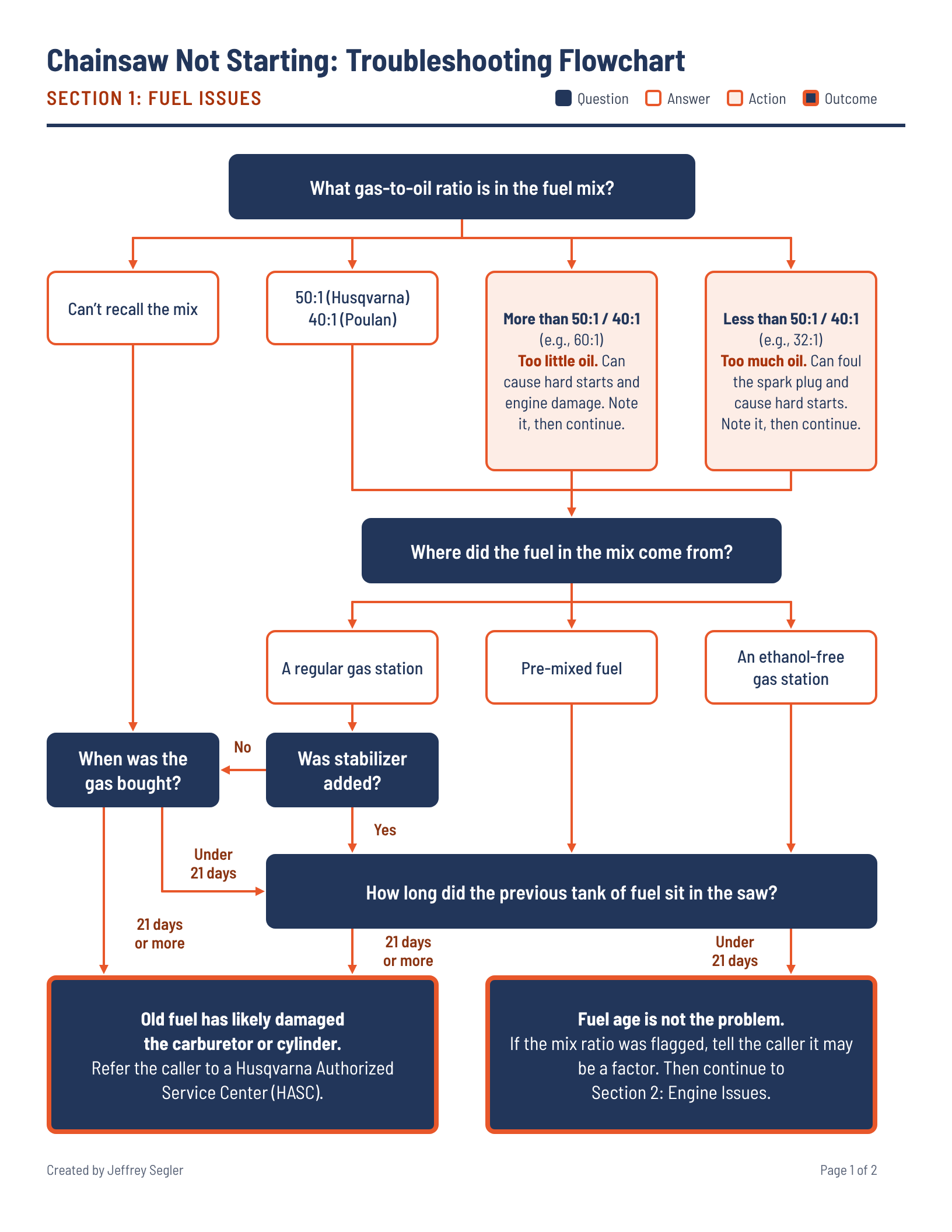
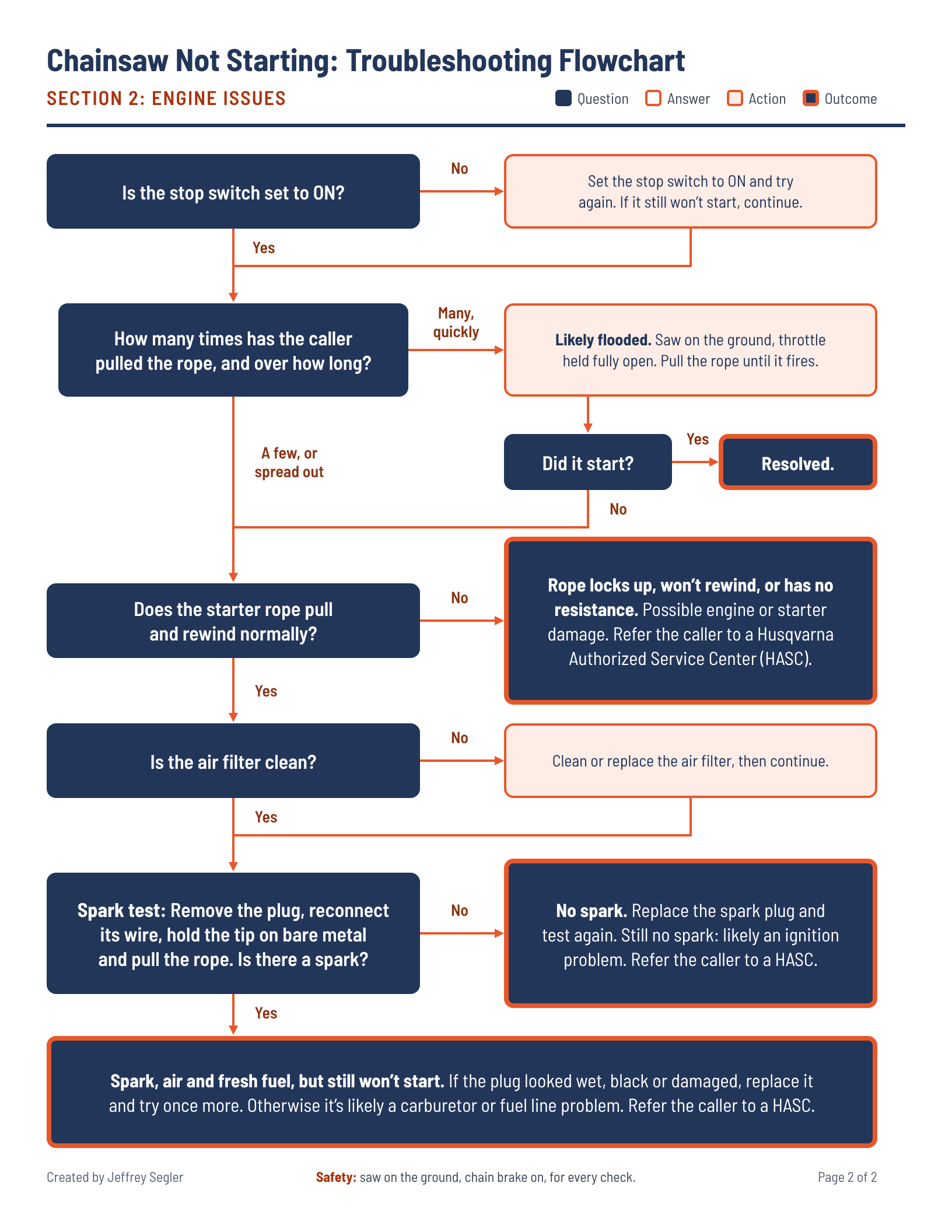
A saw that won't start can come down to stale gas, the wrong oil mix, a flooded engine, a dirty air filter, a bad spark plug or real engine damage. The agent can't look at any of it, so every answer has to come from the caller, and the order of the questions decides how fast the call ends.
Before the aid, troubleshooting lived in a pure text document. Agents had to page through it slowly on every call, with the customer waiting, and nobody could hold it in their head.
04 / THE 2026 REBUILD
Half Finished, Then Lost
I was laid off with the fuel page done and the engine page blank, and the source file didn't survive. Rebuilding it from an old PDF meant reading my own logic cold, and some of it didn't hold up.
- Backwards wordingA mix with too much oil was described as having too little gasoline. Each wrong ratio now names its real effect: too little oil risks engine damage, too much fouls the plug.
- Contradictory endingA caller with a flagged ratio could still reach “Not a fuel issue.” The ending now carries the flag forward to the engine checks.
- Unexplained jargonHASC was never spelled out. Fine for agents, lost on anyone new.
- Visual noiseCurved, crossing arrows over a large watermark. Now straight connectors on a grid, and every box is checked for room around its text.
- The missing halfEngine Issues: stop switch, rope pulls, starter rope, air filter and a spark test, each ending in a fix or a referral.
05 / RESULT
Read at a glance, then from memory.
The text document became one that agents could read at sight-reading speed. Each step is a short question with a few fixed answers, so after a handful of calls agents had the path memorized and stopped paging through anything.
The evidence was silence: no-start questions stopped coming to me. Around the same time, call times dropped, and they stayed down.
06 / WHAT I'D DO NEXT
With a Real Budget and a Mandate
Walk two or three new agents through both pages on recorded no-start calls and time each one. Track how many no-start calls end in a service referral before and after rollout. Add a photo panel showing where the stop switch, primer bulb and air filter sit on common models.